Venus in 2014 Observed Unpredicted Low Temperatures

With the constant revolution of all the planets and changing weather throughout the solar systems, astronomers and cosmonauts in June of 2014 were not surprise with the latest findings identified by Unified Aerospace and Astrophysics team that Venus actually observed similar earth’s temperatures. Those aerial locations had temperatures ranging as low as 210 ºF. These parts of Venus are located mostly on its’ mountainous highest reefs in the East of the planet where presume to have waterfalls.

The mission was made possible by the combine efforts from TAA (The Aerospace and Astrophysics), SST (Satellite Space Telescope) and UAA (Unified Aeronautics and Astronautics) experts and committee members who reported transmitted the data from both satellites and radio frequencies diligently to actually document signals captured during the entire mission.

Venus is said to be positioned when viewed from above, on its axis the opposite way that most planets rotate. That means on Venus, the sun would appear to rise in the west and set in the east. On Earth, the sun appears to rise in the east and set in the west.

The Venusian year — the time it takes to orbit the sun — is about 225 Earth days long. Normally, that would mean that days on Venus would be longer than years. However, because of Venus’ curious retrograde rotation, the time from one sunrise to the next is only about 117 Earth days long.

Venus gravitational pull from it’s center of gravity as it orbits the sun is far extended compare to that of earth at variant angles. It should also be noted that roughly 2/3 percent of the Venusian surface is covered by flat, smooth plains that are marred by thousands of volcanoes, ranging from about 0.5 to 150 miles (0.8 to 240 kilometers) wide, lava flows, causing carving long, winding canals up to more than 3,000 miles (5,000 km) in length, longer than on any other planet.

astrological readings of venus and earth

Inert gases produce during mountainous volcano such as helium, carbon dioxide and nitrite oxide reduces with time leaving the planet less vigorous and stable with winds ranging from 180 mph (290 kph). It’s not surprise that there have been instances where the very top layer of Venus’ clouds zip around the planet every four Earth days, propelled by hurricane-force winds traveling roughly 224 mph (360 kph) with an escape velocity of 10.36 km/s. This super-rotation of the planet’s atmosphere, some 60 times faster than Venus itself rotates, may be one of Venus’ biggest mysteries. The winds at the planet’s surface are much slower, estimated to be just a few miles per hour.


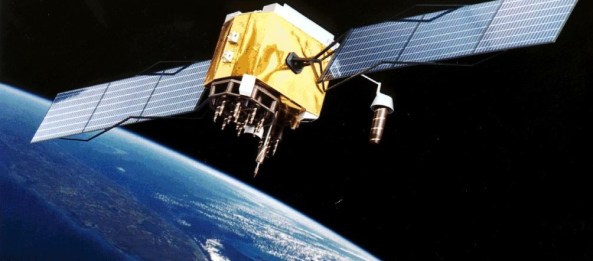
satellite
An image of the Satellite Space Telescope 2014 during the mission escaping the earth’s orbital peripheral coordinates into revolution spherical space.

Six mountainous regions make up about one-third percent of the Venusian surface. One mountain range, of about 540 miles (870 km) long and reaches up to some 7 miles (11.3 km) high, making it the highest feature on the planet.

Attractions and cool weather effects

Have you ever notice that October is one of the coolest month in the year? People may be thinking why, but they can easily tend around and realize that their kids and children have adapted to their new environment of schooling, limiting the number of visits to the doctors and geared up with all sorts of treats and tricks ideas to enjoy settling down just like the weather. The best things about October can be experience from nature just turning into different colors and attracting our creativity within each and everyone of us to contribute to different festivities. Either by buying or selling products. Its always a wonderful time to appreciate nature and draw from its tremendous powers. When these thoughts are projected on whatever form of arts, they can be visualize at different angles by the observers to disproof certain flows, thus challenging the mind to determine what factors may had contributed to those results during the process of production.

Acrylic painting using rectangle red mate as border frame.

Digital Acrylic painting using rectangle red mate as border frame.

The calmness and coolness keeps the mind of artists to an imaginary flow of thoughts leaving them to portray their creativities on whatever media they’re working with. These works can be found on prints, ceramics, labels, paintings, outfits, museums, infrastructures and much more. If you are a music lover and live nearby metropolitan cities, you can always catch symphonies’ series played in orchestra chambers, dramas performed in local playhouses etc. There are always night live themes for you and your family or hangout friends, to enjoy.

MINNESOTA

Map of Minnesota, USA

Map of Minnesota, USA

Minnesota is located in the North Central (or Midwest Region) of the United States of America – a part of North America – Minnesota is bordered by the states of North Dakota, South Dakota, Iowa and Wisconsin, the Canadian provinces of Manitoba and Ontario, and by Lake Superior.

Capital City: Saint Paul
Location: 44º 57′ N, 93º 06′ W

Largest City: Minneapolis
Location: 44º 59′ N, 93º 16′ W

Minnesota geographical area and extent:
The total area of Minnesota is 84,402 sq mi (218,601 sq km), of which land accounts for 79,548 sq mi (206,029 sq km) and inland water 4,854 sq mi (12,572 sq km). Minnesota extends 406 mi (653 km) N-S; its extreme E-W extension is 358 mi (576 km).

Minnesota is bordered on the N by the Canadian provinces of Manitoba and Ontario (with the line passing through the Lake of the Woods, Rainy River, Rainy Lake, a succession of smaller lakes, the Pigeon River, and Lake Superior); on the E by Michigan and Wisconsin (with the line passing through Lake Superior and the St. Croix and Mississippi rivers); on the S by Iowa; and on the W by South Dakota and North Dakota (with the line passing through Big Stone Lake, Lake Traverse, the Bois de Sioux River, and the Red River of the North).

The length of Minnesota’s boundaries totals 1,783 mi (2,870 km). The state’s geographic center is in Crow Wing County, 10 mi (16 km) SW of Brainerd.

Minnesota – Mill City Museum located downtown Minneapolis

This touristic site has a bridge connecting the East and West frontage roads from Mill city to West Island Rd. where cafés, gift shops and night live entertainment are located. The area is full with guests, students and tourists throughout the week, especially during weekends.

The Guthrie theater is located on the same street as the City Mill with a packing ramp on the opposite side of the street, two bocks from S. Washington Ave. 

MN Downtown - City Mill Museum
What a magnificent look of the Mill City Museum from W. Island Rd. over the Mississippi river! Great attraction for children, family and tourists. The Stone Arch Bridge is a landmark span for pedestrians, cyclists and two-wheelers stand-up electric scooters. Restaurants, cafés and boutiqués or gift shops are located in the building and close nearby streets. 

During Summer and Fall, there is an open farmer’s market on this district during the weekend, attracting celebrities, entertainers, and popular crowd to shop fresh produce.

If you are lucky, you can catch some of them just leaving performances and comic theaters dropping by to pick up fresh flowers, mints and fruits for the week. The popular woven craft men and women bring in their tools and gargets to demonstrate their creativity and sell finish products to buyers.