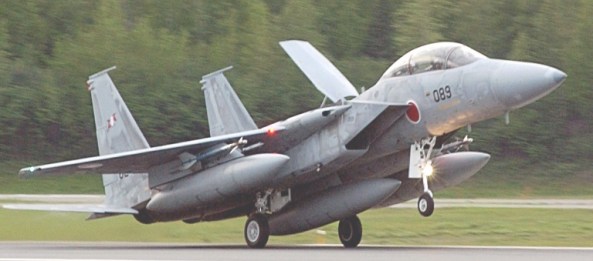
American air force jetfighters based in Korea

American air force fighterjets based in Korea Aerospace Industries (KAI) T-50 supersonic aircrafts propel and maneuver by AF trainees, with deliveries due to be completed by 2017. The order, including training, which is valued at $1.1 billion, but the U.S. says supporting the Korean Aerospace Industries (KAI) over a period of 20 years, also with contracts will take a total revenue beyond $2 billion.

Though Iraq’s aircrafts are designated T-50IQ, an industry official says the aircrafts were built to the design of the FA-50 light attack variant of the T-50 family. Powered by single General Electric F404 engine, the T-50 is a contender for the U.S. Air Force’s T-X trainer’s requirement.

fighterjets

KAI’s T-50 program has strengthened considerably this year after averaging a production rate of within a period of two months since deliveries began in 2005. The production rate is now twice monthly, not far below capacity of 2.5 a month, KAI says. While the exact state of orders and deliveries is unknown, it is clear that the program has sufficient orders to maintain the monthly rate of supersonic jets until 2017. Iraq’s first T-50IQ is due to be delivered in April 2016 and the last in April 2017.

This is the type secondly ordered in 2013. In May, the South Korean defense ministry ordered about 400 FA-50s due for delivery to the South Korean air force by the end of 2016. Meanwhile, KAI this year began deliveries of a first batch of 20 FA-50s ordered for the South Korean air force in 2012 and 106 TA-50s that Indonesia ordered in 2011.

In October South Korea confirmed that the Philippines had chosen the FA-50 for a requirement for 120 aircrafts, but that country has not placed an order. KAI says it is also pursuing possible orders from Chile and Botswana.

The BAE Systems Hawk was a contender for the Iraq order. KAI says it also beat competition from the Yakovlev Yak-130 and Aero L-159.

KAI has not said how many FA-50s were covered by the South Korean defense ministry’s May order. An industry source said then that it was “about 100.” The figure is likely to be exactly 60, since the air force likes to order fighters in multiples of 20.

Samsung Techwin assembles and partly makes F404 engines for the T-50 family. The airframe, developed with much help from Lockheed Martin, is based on the aerodynamics of the F-16, which Iraq has also ordered.
Venus in 2014 Observed Unpredicted Low Temperatures

With the constant revolution of all the planets and changing weather throughout the solar systems, astronomers and cosmonauts in June of 2014 were not surprise with the latest findings identified by Unified Aerospace and Astrophysics team that Venus actually observed similar earth’s temperatures. Those aerial locations had temperatures ranging as low as 210 ºF. These parts of Venus are located mostly on its’ mountainous highest reefs in the East of the planet where presume to have waterfalls.

The mission was made possible by the combine efforts from TAA (The Aerospace and Astrophysics), SST (Satellite Space Telescope) and UAA (Unified Aeronautics and Astronautics) experts and committee members who reported transmitted the data from both satellites and radio frequencies diligently to actually document signals captured during the entire mission.

Venus is said to be positioned when viewed from above, on its axis the opposite way that most planets rotate. That means on Venus, the sun would appear to rise in the west and set in the east. On Earth, the sun appears to rise in the east and set in the west.

The Venusian year — the time it takes to orbit the sun — is about 225 Earth days long. Normally, that would mean that days on Venus would be longer than years. However, because of Venus’ curious retrograde rotation, the time from one sunrise to the next is only about 117 Earth days long.

Venus gravitational pull from it’s center of gravity as it orbits the sun is far extended compare to that of earth at variant angles. It should also be noted that roughly 2/3 percent of the Venusian surface is covered by flat, smooth plains that are marred by thousands of volcanoes, ranging from about 0.5 to 150 miles (0.8 to 240 kilometers) wide, lava flows, causing carving long, winding canals up to more than 3,000 miles (5,000 km) in length, longer than on any other planet.

astrological readings of venus and earth

Inert gases produce during mountainous volcano such as helium, carbon dioxide and nitrite oxide reduces with time leaving the planet less vigorous and stable with winds ranging from 180 mph (290 kph). It’s not surprise that there have been instances where the very top layer of Venus’ clouds zip around the planet every four Earth days, propelled by hurricane-force winds traveling roughly 224 mph (360 kph) with an escape velocity of 10.36 km/s. This super-rotation of the planet’s atmosphere, some 60 times faster than Venus itself rotates, may be one of Venus’ biggest mysteries. The winds at the planet’s surface are much slower, estimated to be just a few miles per hour.


satellite
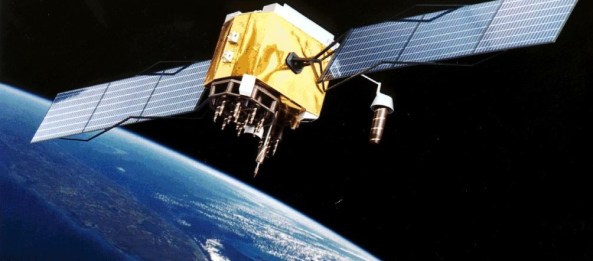
An image of the Satellite Space Telescope 2014 during the mission escaping the earth’s orbital peripheral coordinates into revolution spherical space.

Six mountainous regions make up about one-third percent of the Venusian surface. One mountain range, of about 540 miles (870 km) long and reaches up to some 7 miles (11.3 km) high, making it the highest feature on the planet.